Pass the Salt, Pass the Plot: London’s Long-Table Nights Find Their Moment
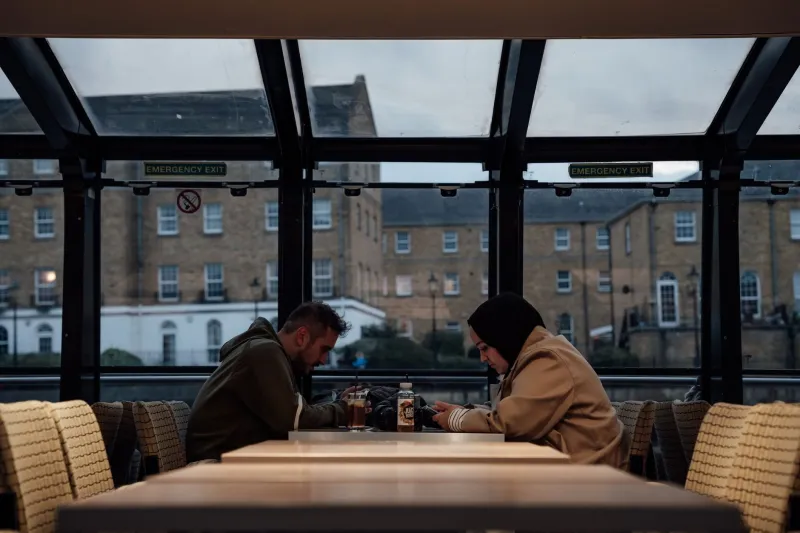
There is a particular kind of London night that begins with a small act of surrender. You take your seat at a long table, you nod at the person opposite, you move your glass a fraction to the left, and you accept that the next few hours will not be entirely yours to control. That is the point. The long communal table is not a new idea, but it has become one of the city’s more persuasive pieces of social architecture — a single surface that turns a room into a theatre of small collisions.
The table as stage
A standard restaurant table is a private island. It gives you a view of the room but keeps the room at a polite distance. A long table does the opposite. It puts you in the ensemble. You are aware of the couple negotiating a second bottle, the group of four dissolving into a birthday, the solo diner reading the room over a plate of something excellent. The table becomes a stage, and everyone on it is both audience and cast.
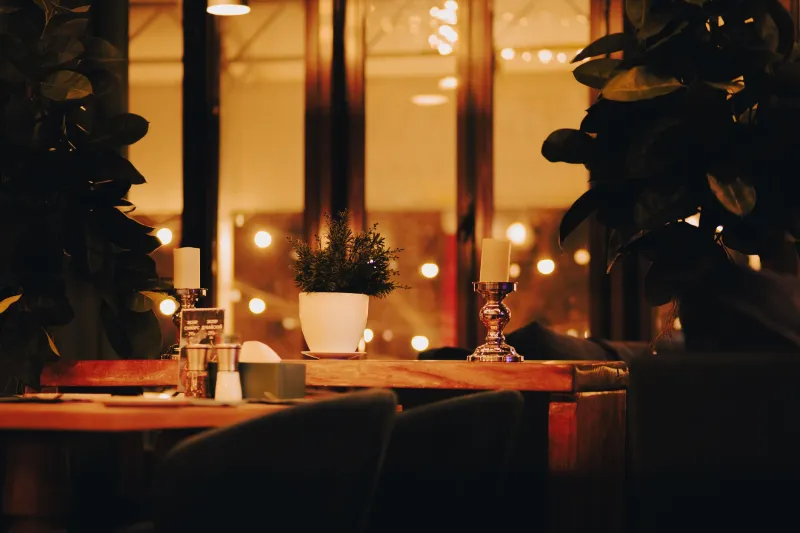
That is why the best long tables do not feel like canteens. They feel edited. The lighting has to work at close range, the seating has to give you enough elbow room to relax, and the service has to understand that the table is a single organism with several moods. When those things align, the shared table stops being a compromise and starts being the reason you booked.
Why it works after dark
Londoners are good at being private in public. The long table interrupts that habit just enough. It creates what you might call polite proximity: you are close enough to catch a fragment of conversation, far enough to pretend you did not. The result is a low-level social hum that makes a room feel alive without forcing anyone into a networking event.
It also changes the pace of a night. At a two-top, the evening is a sealed arc. At a long table, time becomes more porous. You might arrive for a quick plate and stay for a second glass because the table has settled into a rhythm. You might leave with a recommendation for a bar you had never heard of, or a phone number for a private-hire room you will absolutely need in three months. The long table is a quiet engine for the kind of incidental connection that London otherwise makes you work for.
The rules of the long table
There are a few unwritten rules, and they are worth knowing. First, claim your space without colonising it. A bag on the bench is fine; a coat draped across two seats is not. Second, read the room before you read the menu. Some long tables are conversational by design; others are deliberately reserved. The difference is usually obvious within a minute. Third, order with the table in mind. Sharing plates make sense on a shared surface. A neat procession of individual mains can make the table feel like a row of separate appointments.
And finally, do not overthink the seating plan. The long table works because it is slightly unpredictable. You are not there to engineer the perfect evening. You are there to let the evening happen in company.
Where the shared surface is the main event
A handful of London rooms make the long table feel less like furniture and more like a premise.
Carousel, Marylebone has built its reputation on the communal format, with chef residencies and a long table that makes the room feel like a dinner party with a very good guest list. It is the kind of place where the person next to you is part of the experience, not an obstacle to it.
The Cheese Bar, Camden understands that melted cheese is a social lubricant. The communal seating keeps things casual, and the long table turns a quick snack into a proper session. It is not precious, and that is exactly why it works.
Petersham Nurseries, Covent Garden brings the long-table idea into a more polished setting, where private dining and shared meals feel genuinely connected to the room rather than bolted on. It is a good reminder that communal does not have to mean cramped.
The Culpeper, Spitalfields has the kind of upstairs-and-rooftop flexibility that makes a long table feel like a natural extension of the building. It is the sort of room where a work dinner can loosen into something more interesting by the second bottle.
The Hoxton, Holborn and its sibling lobbies across London have made the long table a fixture of the in-between hours. You can work at one, meet at one, or simply sit at one and watch the hotel’s social life arrange itself around you. It is a useful reminder that the long table is not only a dining format. It is a way of holding a room open.
The private-hire angle
For anyone planning a private hire, the long table is one of the most useful tools in the room. It gives a group a centre of gravity. It makes a space feel full without making it feel crowded. It also solves the perennial London problem of the mixed group: the colleagues who do not know each other, the friends who arrive at different times, the plus-ones who need a way in. A long table gives everyone the same view and the same opportunity to lean in.
The best private-hire rooms use that to their advantage. They do not push the table against a wall and call it flexible. They put it where the light is good, where the service can move, and where the room can breathe around it. That is the difference between a table that fills a space and a table that makes the space.
The last word
The long table is not for every night. Sometimes you want the privacy of a corner, the ceremony of a proper dinner, the freedom to be quietly unbothered. But when you want a London evening with a bit of texture — a night that feels less like a reservation and more like a small, well-dressed experiment in being together — the shared table is hard to beat. Pass the salt. Pass the plot. See what happens next.