The Interval Walk: Why the Streets Between Doors Decide Your Night
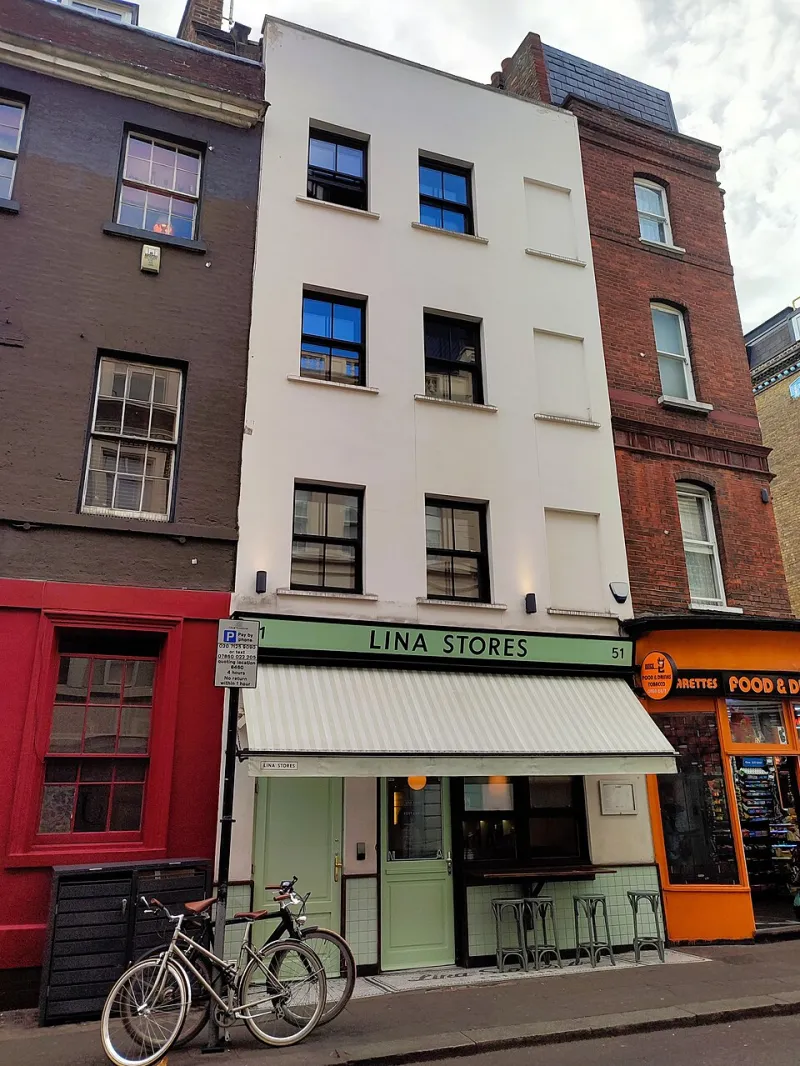
Photo: Ewan-M, CC BY-SA 4.0, via Wikimedia Commons
There is a moment, somewhere between the second drink and the second venue, when a London night either gathers itself or starts to sag. It rarely happens inside. It happens outside, on a pavement, in the four to seven minutes it takes to get from one door to another — the part of the evening that appears on no booking, no guest list, and no plan.
Most of us treat that stretch as dead time. Something to be minimised, Ubers to be summoned, a Google Maps pin to be obeyed. Which is a shame, because the interval walk is the cheapest bit of production value available to any night out. It has a job: to close one room properly and open the next one with a bit of anticipation still intact.
The door closes before the room does
A good venue leaves a residue. Your ears are still ringing slightly, your eyes are still adjusting, someone in the group is mid-sentence about the thing that happened at the bar. Step straight into a car and you arrive at the next place still carrying the last one, which is why people walk into restaurants arguing and can't settle until the second glass.
The walk is a buffer. Cold air, a bit of noise from the street, and the simple physical fact of moving does something a change of lighting can't. It gives the group a chance to finish the conversation, laugh at whatever needed laughing at, and arrive with a fresh set of eyes.
It also gives you a window in which to make one decision — where next — away from the pressure of a queue behind you and a host with a clipboard.
Why five minutes is the right length
Shorter than three minutes and you haven't really left; you're just next door, and the two rooms blur into one long, undifferentiated evening. Longer than about ten and the momentum goes: coats come back on, someone checks the last train, and the night quietly decides it has peaked.
The sweet spot is a route that takes a competent walker somewhere between four and eight minutes — long enough to change the air, short enough that nobody has time to reconsider.
That's a small distance in this city. It's Dean Street to Berwick Street. It's the stretch from the back of King's Cross to Coal Drops Yard. It's most of the way round the corner from anywhere in Shoreditch to anywhere else in Shoreditch.
Routes that earn the walk
Soho, side streets only. The temptation is to cut along Oxford Street or Shaftesbury Avenue, which is the fastest way to remind everyone that they're in a shopping district. Go one street back instead — through the Brewer Street and Peter Street blocks, past the doorways and the queues, with the neon doing the decorating. You arrive somewhere in the middle of Soho feeling like you've been let in on something rather than bussed through it.
The South Bank underpasses. Coming out of the concert halls and heading east towards the arches, the walk under Waterloo Bridge and along the river does more atmospheric work than most venues manage all night. The graffiti, the acoustics, the sudden reveal of the skyline — it's a proper interval, and it costs nothing.
Redchurch Street, west to east. Shoreditch walks get ruined by main roads. Take the back run past the terraces and the little shopfronts instead, and the neighbourhood does the work of a set change.
The Barbican highwalks. Rarely used, slightly confusing, and worth it. Coming down off the estate-level walkways into the Beech Street tunnel and out the other side feels like a scene transition rather than a commute.
And the ones that quietly kill it
There are routes that will flatten a night, and they're nearly always the ones chosen in the name of speed.
Anything that involves standing at a crossing on a four-lane road for ninety seconds is a mood tax. So is the long walk down a stretch of pavement with nothing on it — no light, no other people, no windows to look into. And so, especially in winter, is the route that takes you past a dozen closed shutters when you could have gone the long way round past a pub with its lights on.
The other killer is the group walk that turns into a group decision. Six people on a corner, two phones out, three opinions, and the energy of the evening draining into the gutter while someone says "I know a place" with no conviction whatsoever. Decide the route before the door closes behind you, not on the pavement.
A short manual for the interval
- Agree the next stop before you leave the first one. Even loosely. Uncertainty on a corner costs more than it saves.
- Walk in twos, not as a shoal. Groups spread out on a pavement are slower, louder and more likely to lose someone.
- Put the phone away for the crossing. Quick check for the booking, then done. Scrolling is what the interval is meant to prevent.
- Take the scenic version if it costs you ninety seconds. Nine times out of ten the extra street is worth it.
- In winter, plan the route around shelter. A covered cut-through or an arcade makes a cold walk feel deliberate rather than endured.
None of this requires money or a booking. It requires only the admission that a night out is a sequence of rooms joined by streets, and that the streets are part of the programming.
Get the interval right and the second venue has a job to do the moment you walk in. Get it wrong, and you'll spend the first fifteen minutes of the next place trying to get back to where you were an hour earlier.
The door is the last impression, as anyone who has ever left a party badly knows. But the walk there is the first one — and in this city, it's almost always shorter than you think.