Outside First: Five London Doors That Turn the Queue Into a Warm-Up
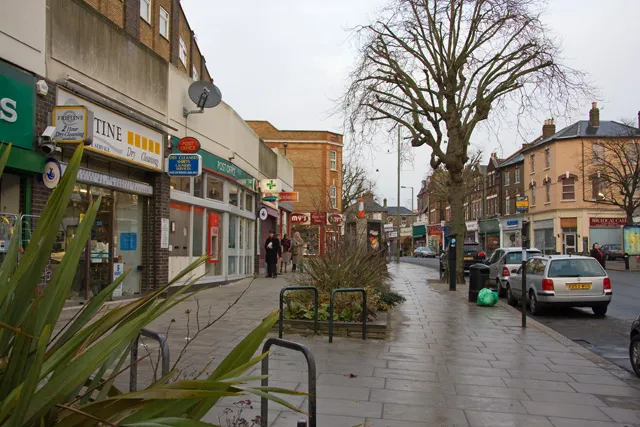
Photo: Martin Addison, CC BY-SA 2.0, via Wikimedia Commons
London has a bad habit of treating the pavement as a holding pen. You book, you turn up, you stand in a line that snakes past a bin and a bus stop, and the night starts with a small indignity. The best rooms do the opposite. They understand that the queue is not the prelude to the evening; it is the first bit of hosting. Get the first ten minutes outside right and the room inside has already done half its work.
That is the Pentagon London test: ignore the press release, ignore the lighting rig, and watch how a venue handles the people who are not yet through the door. Here are five very different London spots that pass.
1. Ronnie Scott's, Soho — the queue that has a host, not a bouncer
Frith Street on a late-set night is its own little theatre. The queue outside Ronnie Scott's is rarely silent — there is the low hum of people deciding whether to risk a second drink, the occasional saxophone case being shifted, the familiar Soho traffic of taxis and theatregoers. What makes it work is the door staff. They do not simply count heads and look past you. They read the line, answer the obvious questions and keep the mood light without turning it into a cabaret.
The nearby pubs do the rest. A short detour to The Spice of Life or The French House gives the wait a shape: you are not loitering, you are staging. Ronnie Scott's ranks first because the wait feels like part of the booking. You are not left to guess whether you are in the right line or whether the set has already started. The queue has a host, and that changes everything.
2. Nightjar, Shoreditch — the waitlist that behaves like a reservation
Nightjar's basement room is the kind of place that rewards a little patience, and its walk-in list is the reason the patience does not curdle. Rather than letting a crowd congeal on the pavement, the door takes a name and gives a rough time. You are then free to disappear into the Shoreditch evening rather than stand guard over your own place in the queue.
That is a small piece of operational genius. A virtual waitlist only works if the venue treats it with the seriousness of a reservation, and Nightjar does: you are not forgotten, you are not left refreshing a screen, and the handover at the door is calm. The nearby bars on City Road and Great Eastern Street become the holding room, which is exactly what a good queue should do — distribute the waiting rather than concentrate it. It ranks second because the system is quietly civilised, even when the room is full.
3. The Jazz Café, Camden — the pavement that knows the set times
The queue on Parkway has a rhythm to it. On a busy night, The Jazz Café's door staff move the line in pulses, not one slow drip, and they are clear about what is happening inside. That sounds basic. In London, it is not. A queue that knows the set times is a queue that has already started to DJ the evening.
The nearby pubs — The Spread Eagle and the various Camden boltholes within a short walk — act as informal holding rooms, and the door staff seem to understand that a good wait is a shared joke rather than a test of endurance. The Jazz Café ranks third because the system is not fancy; it is simply well drilled. You arrive as a punter and leave the pavement feeling like you have been handed a running order.
4. The Rivoli Ballroom, Crofton Park — the queue that dresses for the occasion
South London's ballroom nights have a different queue energy. The Rivoli's crowd tends to arrive dressed for the occasion, and the line outside becomes part of the costume: a flash of sequin, a borrowed dinner jacket, a group deciding whether the feather boa is too much. The door staff lean into it rather than police it.
On a busy themed night, the wait is managed with a light touch — enough order to keep the pavement moving, enough charm to make the queue feel like a party that has spilled outside. The Brockley Jack and other local pubs are close enough to serve as a holding room without breaking the spell. The Rivoli ranks fourth only because the wait is less about technology and more about atmosphere. It is the queue as dressing room, and it works.
5. EartH, Hackney — the queue with a cultural alibi
EartH's former cinema on Stoke Newington Road gives its queue a natural advantage: there is something to look at, something to talk about, and a sense that the evening has already begun. The door staff keep the line moving without making it feel like a conveyor belt, and the nearby pubs — The Coach & Horses and the cluster around Dalston — make the wait feel like a legitimate part of the night rather than an administrative error.
It ranks fifth because the operation is more relaxed than the others, but the principle is the same: a queue should have an alibi. If you are going to stand outside for twenty minutes, the venue should give you a reason to feel good about it.
The lesson is not that London needs more queues. It is that the first ten minutes outside the door tell you more about a venue than the first ten minutes inside. A bad queue is a warning: chaos, indifference, a door that treats you as a problem to be processed. A good queue is a promise. It says the room knows you are coming, and it has already started looking after you. That is the Pentagon London standard — and it starts on the pavement.