The Door Is the Last Impression: How London Rooms Win the Final Quarter-Hour
You can learn more about a London venue in its last fifteen minutes than in its first hour. The greeting is choreography; the goodbye is character. Private-hire clients obsess over the entrance — the arrival drink, the first reveal, the guest list at the door — and fair enough. But the memory your guests take home is rarely the canapé. It is the scramble for a coat, the wait for a cab in the rain, the staff member who says goodnight like they mean it, or the one who has already started stacking chairs around your ankles.
That final quarter-hour is now a design brief. Across London, the better rooms are treating the exit as part of the product: cloakroom staffed like a small operation, taxi bays marshalled, lighting and music tapered rather than cut, and a farewell that feels deliberate instead of relieved.
The Exit Is Part of the Product
‘We used to treat exit as security’s problem,’ says Mara Ellison, general manager of a 180-capacity private-hire room in Fitzrovia. ‘Now it is part of the host’s script. If someone is still waiting for a coat at 12.20am, they do not remember the excellent negronis. They remember the wait.’
Ellison’s team now runs what she calls a ‘soft close’: a fifteen-minute window in which the music steps down, the lights lift gradually, and staff move from service to send-off without making anyone feel evicted. ‘The trick is to give people a nudge without breaking the mood. A hard lights-up is like a referee’s whistle. A taper feels like the end of a good dinner.’
Tom Besley, operations lead at a riverside private-hire space, is equally blunt. ‘The last fifteen minutes are where amateur rooms show themselves. You can have a beautiful event and lose it at the cloakroom. We count coats like covers now. If we know 220 are in, we staff for 220 coming back.’
What Managers Are Actually Changing
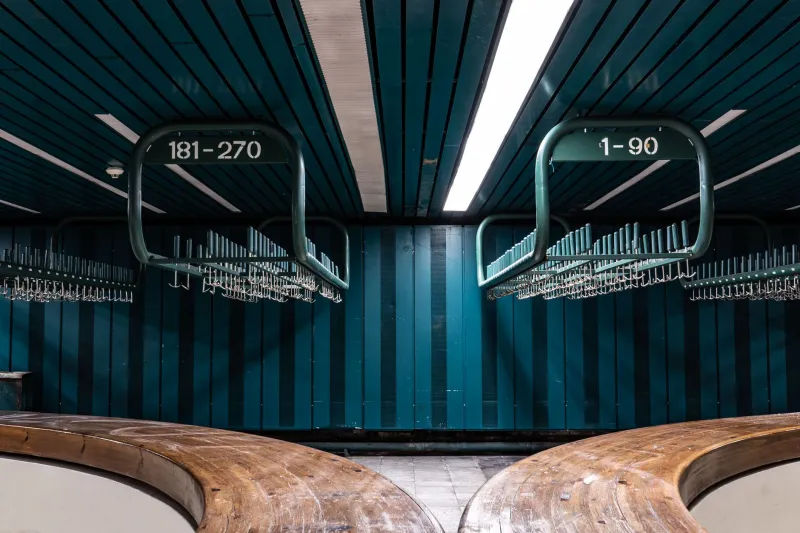
The changes are unglamorous and effective. Cloakroom systems are being rethought with numbered rails and pre-sorted tickets. Taxi bays are being marshalled by staff with radios rather than left to chance. Exit playlists are becoming a thing — lower tempo, familiar but not funereal, enough to signal ‘one more song’ without turning the room into a coach station. And farewells are being assigned, not left to whoever is nearest the door.
‘We have a rule: nobody leaves without being thanked,’ says Ellison. ‘It sounds basic. It is basic. But it changes the temperature. Guests feel hosted rather than processed.’
Besley adds a practical note: ‘We brief the final hour like we brief the first. Who is on the door, who is on coats, who is outside with the taxis. If it rains, we have umbrellas. If the Tube is down, we have a card with local cab numbers. It is not glamorous, but it is hospitality.’
Pentagon’s Five-Point Exit Audit
Before you book a private room, ask what happens when the party ends. A venue that can answer these five questions is usually a venue that has thought about the whole night.
- Cloakroom throughput. How many coats can you return in ten minutes? If the answer is vague, ask for a ratio of staff to guests. A good room knows its numbers.
- Taxi and pickup choreography. Is there a dedicated bay, a marshalled pickup point, or a staff member outside? A helpful address is not the same as an exit plan.
- Sound taper. Does the music stop, or does it step down? Does the lighting snap on, or rise? The best exits feel like a fade, not a fire drill.
- Farewell layer. Is there a named host at the door? Will someone thank guests and offer water, directions or umbrellas? Small gestures do heavy lifting.
- Neighbour-proofing. How do guests leave without clogging the street, smoking area or lobby? Ask about egress routes, noise and last-train advice. The room that protects its neighbours protects your reputation too.
How to Spot a Room That Ends Well Before You Book
Visit at closing time, not just at setup. Watch how staff handle the last twenty guests. Listen for the tone of the music at 11.45pm. Check whether the cloakroom is a desk with a queue or a system with a rhythm. Ask the duty manager a simple question: ‘Walk me through the last fifteen minutes.’ The answer will tell you more than any brochure.
Look for the small signals of a room that plans its endings: staff with radios, a printed taxi card, a host who knows where the lifts are, a cloakroom that does not double as a lost property bin. A venue that ends well is not necessarily the flashiest room in London. It is the one that understands the door works both ways.
The Last Word
The opening may set the scene, but the exit sets the story. In a city with so many beautiful rooms and so little tolerance for a chaotic send-off, the final quarter-hour is no longer an afterthought. It is the proof. Book the room that says goodnight properly.