Log In, Lean Back: London’s Hearth-Led Rooms for Winter 2026
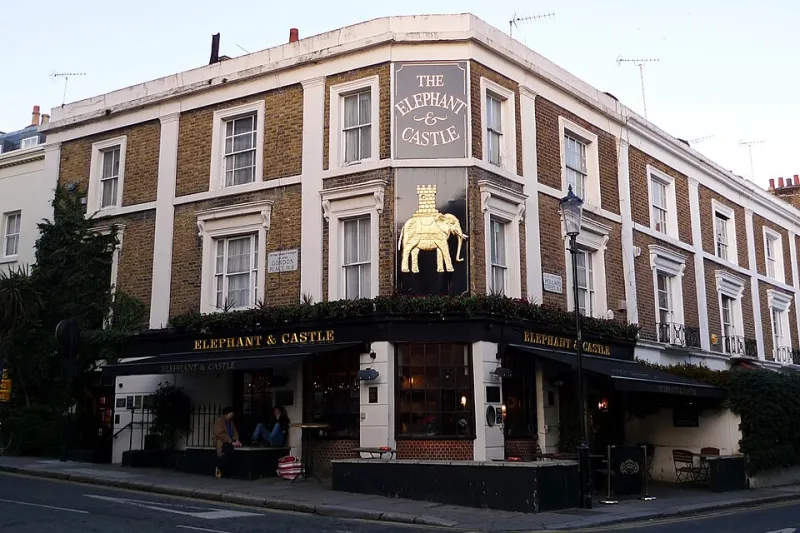
Photo: Ewan-M, CC BY-SA 2.0, via Wikimedia Commons
London winter nights have a quiet hierarchy. The best rooms don’t announce themselves with a doorman or a drinks list; they pull you in with a grate, a log basket and the low crackle of something actually burning. This winter 2026, the venues getting it right are the ones where the fire is not wallpaper. It’s the host — deciding who sits where, how long a drink takes, and when the conversation drops its volume.
The Fire Sets the Pace
A real hearth changes the tempo of a room. Drinks orders slow because people turn towards the flames. Food arrives in a different rhythm: starters linger, puddings get ordered because nobody wants to leave the warm edge of the table. Staff move differently too — they tend the fire between courses, not as a show but as part of service.
That’s the first thing to look for. If a venue has a fire but seats nobody near it, you’re looking at decoration. A proper hearth room puts tables within reach of the warmth without putting them in the grate. It gives you the choice to lean in or cool off.
How to Spot a Hearth That’s Actually Hosting
Start with the practical evidence. Is there a log basket that looks used rather than styled? Is there ash, a poker, a screen that has clearly been moved? Does the room smell faintly of woodsmoke rather than air freshener? A gas flame behind glass can still be lovely, but it rarely hosts a room the way a live fire does.
Ask the question before you book: is the fire lit all day, or only for Sunday lunch? A pub that lights the grate at noon and keeps it going until last orders is offering something different from a hotel lounge that sparks it at 6pm for cocktail hour. Neither is wrong, but only one of them will still be warm at 10.30pm.
Then look at the seating. Chairs angled towards the fire are a good sign. So is a menu that leans into the season — something braised, something shared, a pudding that demands a spoon and no rush. The fire is doing its job when the room feels slower than the street outside.
Pub Dining Rooms Where the Grate Earns Its Keep
London’s old coaching inns and back-street pubs are the natural home of the winter fire. The Spaniard’s Inn in Hampstead has the kind of open fire that makes a corner table feel like a private room, and it’s worth booking ahead for Sunday lunch. The Holly Bush, also in Hampstead, runs on small rooms and low ceilings; the fire there rewards an early evening slot rather than a peak Friday night.
In the City, the George & Vulture does the historic-pub-with-a-fire thing without too much fuss. Out Highgate way, the Flask has the right cosy bones for a cold night. These are not secret addresses — they are well-known for a reason — so the trick is timing. Arrive at 5.30pm for a fireside seat, or book the first sitting on a Sunday and treat the fire as the main event.
Pub dining rooms also tend to have the best fire-side etiquette: you order at the bar, you don’t camp for hours on one drink, and nobody minds if you ask for another log.
Hotel Lounges and Members’ Corners
Hotel lounges play the fire differently. Scarfes Bar at Rosewood London has long used its fireplace as a social anchor — armchairs, low light, a cocktail list that suits a slow hour. The Connaught and the Beaumont keep their own versions of the warm-corner ritual, and the Ned’s darker rooms make a fire feel like part of the architecture rather than an add-on.
Members’ clubs are where the hearth becomes a quiet status symbol. The fire in a club corner is not there to impress a walk-in; it’s there to keep the room civilised after 9pm. If you’re a guest, treat it accordingly: don’t rearrange the furniture, don’t put your feet on the fender, and don’t assume the best seat is yours because you arrived first.
Hotels are also the easiest place to test the fire-service relationship. Ask reception when the grate is lit. If they know the exact time, the fire is part of the room’s routine. If they say ‘when it’s cold’, feel free to lower your expectations.
Fire-Side Etiquette and the Best Times to Go
The best fireside hours in London are not the obvious ones. Sunday lunch from noon to 3pm is peak hearth time, but it’s also peak competition. A weekday between 5pm and 7pm gives you the warm room before the after-work rush. After 10pm, the fire becomes a nightcap: fewer tables, slower service, and the chance to actually hear it crackle.
Avoid Friday and Saturday between 6pm and 8pm if you want to choose your seat rather than take what’s left. If you’re with a group, treat the fireside chair as a rotation, not a throne. And never feed a fire unless staff have said you can — a well-meaning log can wreck a good draw and smoke out the room.
The Quick Test Before You Book
Call ahead with four questions: Is it wood or gas? What time is it lit? Are the tables near it bookable? Does the room get smoky? A venue that can answer all four without hesitation is a venue that actually runs its fire. A venue that gets vague is probably running a mood board.
That’s the difference this winter 2026. The fire is either the host or it’s a photograph. Book the ones where it’s still burning when you leave.