Past the First Door: London’s Hidden Back Rooms and the Art of the Second Act

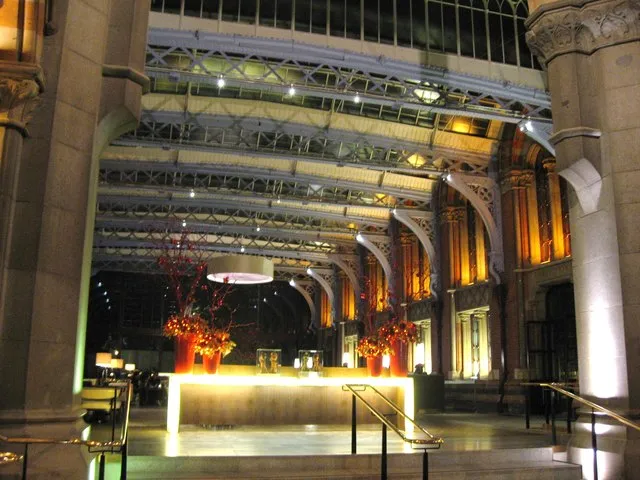
Photo: London hidden basement bar staircase warm lighting interior, via ihavecrayon.com
London has a habit of keeping its best rooms out of sight. You book for the main bar, the street-level dining room, the obvious entrance — and then someone nods towards a staircase, a curtain, or a door marked private, and the night changes shape. The second room is not a spillover. It is the plot twist.
That is especially true as we head into the 2026 party season, when every venue with a decent ground-floor space is chasing the same bookings. The smarter move is to ask what sits behind, above or below the room everyone else is looking at. More often than not, that is where the character lives.
The room behind the room
A good second room does something the first room cannot. It lowers the volume, narrows the guest list, or raises the stakes. At the Barbican, the Pit Theatre sits beneath the main spaces like a concrete bunker for experimental work; the scale is intimate enough that you feel the performance rather than simply watch it. At Soho Theatre, the upstairs and downstairs rooms turn comedy into a contact sport — the main house may sell the tickets, but the smaller rooms sell the story. And in London’s older pubs and hotels, the function room above the saloon often has more atmosphere than the ground-floor bar ever manages: sash windows, a rug that has seen things, and a door that shuts out the street.
These rooms are not always glamorous. Some are low-ceilinged, oddly shaped, or reached via a corridor that smells faintly of chip fat and determination. That is part of the appeal. A second room feels discovered rather than advertised, and discovery is the most underrated ingredient in a London night out.
Read the layout before you arrive
The mistake most people make is treating a venue’s website as a menu of rooms rather than a map of how the night will actually flow. Before you book, look for the floor plan — not just the glossy photographs. Ask where the second room sits in relation to the first, whether it has its own entrance, toilets, cloakroom and bar, and how sound travels between the two.
A separate street entrance is gold for private hire: guests arrive, disappear downstairs, and the evening feels like a secret from the first minute. A shared corridor is less glamorous but can work if the venue manages the handover properly. Ask about door swings, fixed furniture, columns and ceiling height. A room that claims to hold 60 may only seat 40 comfortably, and a low ceiling can make a cabaret set feel like a sauna with a microphone.
Sound bleed is the question Londoners forget. If the main bar has a DJ and the second room is hosting a speech, you need to know what the venue does to separate them. Ask about curfews, licences and whether the second room can operate independently after the main space closes. Get the answers in writing, especially for a private hire.
When to book the second room
For private hire, the second room is often the better buy — provided you are honest about what you need. If your guest list is 30 to 60 and you want a party that does not feel like a conference, a back dining room or basement bar can be more forgiving than a vast main space. It gives people a reason to move, mingle and lean in. It also gives you a natural second act: arrival drinks upstairs, dinner downstairs, dancing in the room you did not know existed when you first enquired.
Book the second room when you want a reveal, a performance, a seated meal that turns into something looser, or a winter party that needs to feel cosy rather than cavernous. Do not book it if you need natural light, step-free access throughout, or the kind of footfall that only a street-level window can generate. And ask about the boring things early: minimum spend, exclusivity, staffing, cleaning, VAT, service charge and whether the room is genuinely yours or just screened off from another booking.
Pentagon London’s rule is simple: if a venue has a second room, ask to see it before you commit to the first. A five-minute look at the stairs, the loos and the bar tells you more than a PDF ever will.
The curiosity tax
There is a risk, of course. A hidden room can be hidden for a reason: bad air, no phone signal, a ceiling that makes tall guests stoop. But when a second room works, it gives a night somewhere to go. It turns a drink into an occasion, a dinner into a story, a party into something people talk about on the Tube home.
London rewards curiosity. The best nights are not always the loudest or the most expensive; they are the ones with a second door, a narrow staircase and a room that makes you glad you asked what was behind it. So next time you book, do not stop at the first room. Open the door you were not shown. That is usually where the night is waiting.